Better risk-to-reward
When price reaches an extreme, reversion becomes the opportunity. These locations provide tighter risk, cleaner invalidation, and a clearer path back toward the mean.

Less noise. Cleaner trades.
Most traders get trapped in the middle: chasing candles, forcing entries, and reacting too late. Extreme to Mean teaches traders to stop chasing candles, stop forcing entries, and start waiting for trades with better location, clearer risk, and a real target — built around reversion-to-mean trading.

THE CORE IDEA
Most traders start with direction: up or down. The problem is that direction alone often leaves them with a 50/50 guess, unclear risk, and no real target. The logic behind how reversion-to-mean trading works gives the decision a cleaner structure. When price stretches away from a fair average, location starts to matter. The edge is not predicting every turn; it is waiting near the edges where risk can be defined, the messy middle can be avoided, and the mean gives the trade a measurable target.
Why most traders fail to stay disciplined
Most traders are not failing because they lack effort or knowledge. They are failing because they lack patience under pressure. They trade the chop, chase moves after they have already taken off, and give in to FOMO too many times. Extreme to Mean focuses on the edges because better location improves risk-to-reward, supports cleaner decision-making, and reduces the stress that comes from forcing weak trades.
When price reaches an extreme, reversion becomes the opportunity. These locations provide tighter risk, cleaner invalidation, and a clearer path back toward the mean.
When price stretches from balance, the trade has more room to develop. These locations create better targets, cleaner expectations, and a clearer plan before entry.
When traders wait for extremes, decisions become less reactive. Better locations reduce FOMO because the trade has a clearer reason, risk point, and target.
What you will learn
If you are brand new to trading, start with The Basics so charts, candles, orders, and timeframes feel less confusing. If you already understand that language, Extreme to Mean teaches traders how to stop reacting to every candle and start understanding market behavior before choosing direction with a clearer process.
Understand market behavior before choosing direction, so you are not reacting one candle at a time.
Learn why the middle creates weak entries, why extremes matter, and how better location improves risk, targets, and trade quality.
Learn how checklists, patience rules, and review habits can turn emotional trading into a more consistent decision-making process.
Featured Book
A practical guide to the one lesson every successful trader must learn: how to wait long enough for better decisions, better locations, and better trades.
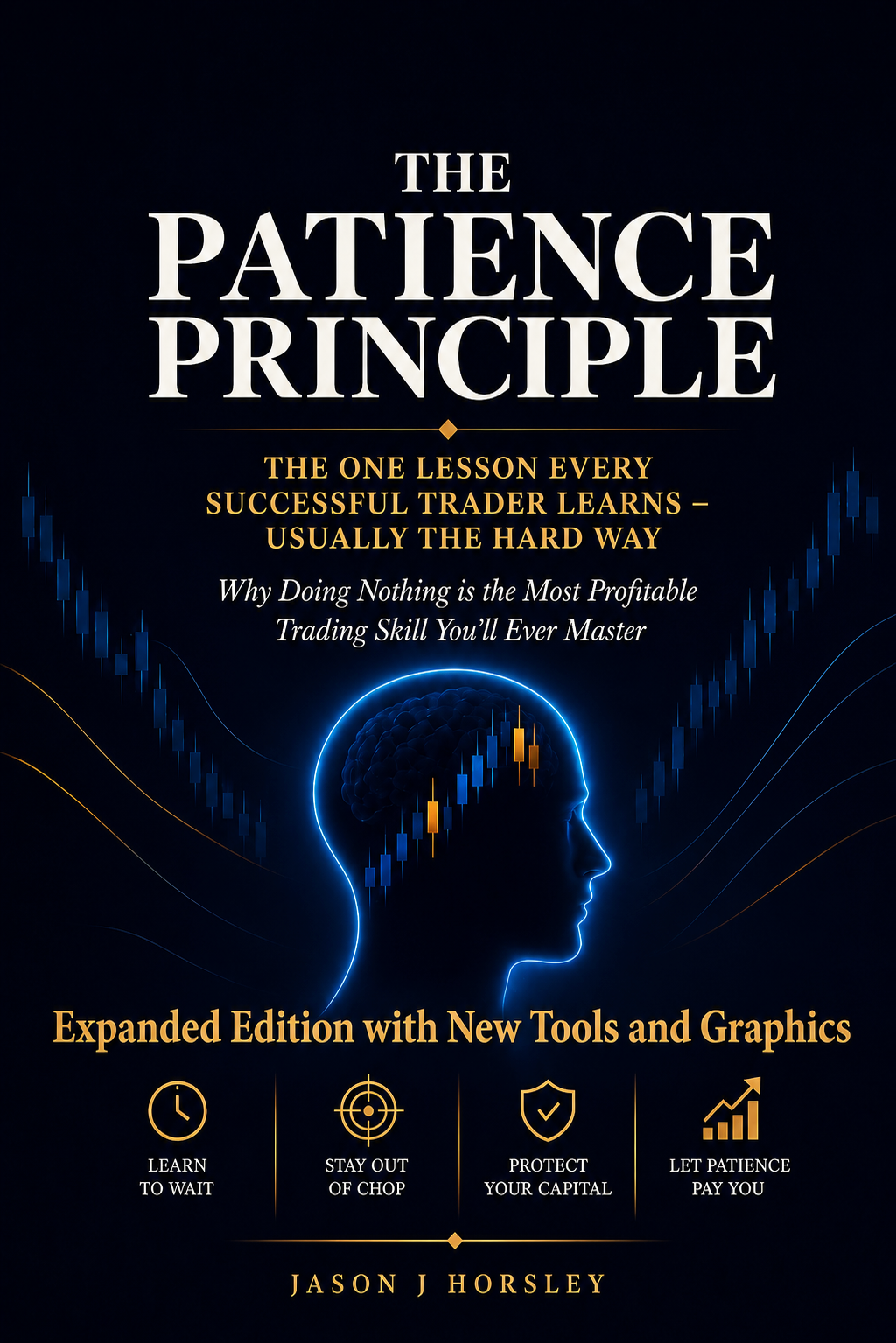
The Patience Principle teaches it before the market makes you pay for it — how to wait long enough for better decisions, better locations, and better trades.
Most traders know they should be patient. Then the market opens, and that knowledge disappears. The Patience Principle was written by the creator of the TMT System — our Trend, Momentum, Trade framework built around proprietary moving averages that help traders read structure, location, context, and confirmation with less stress and more clarity before taking action. It breaks down why waiting isn't weakness. It's a skill, and like every skill in this system, it can be built, structured, and repeated.
Start learning now
Build a cleaner trading process before you risk real money. The free Extreme to Mean library includes cheatsheets, checklists, ebooks, and practical resources designed to help you prepare better, filter weaker setups, and trade with more patience.
Learning Library
Build your trading judgment one lesson at a time. Explore short reads on trading basics, market context, setup quality, patience, risk, and the discipline needed to avoid low-quality trades.
Does the Pattern Day Trader rule apply to futures? Learn why standard futures were never governed by PDT, how futures margin works, and what changed for securities accounts in 2026.
The MarketWhat is de-dollarization? Learn how reserve diversification, trade, payments, debt, gold, BRICS and competing currencies could affect the dollar’s global role.
The SetupBuild a practical day trading checklist around market condition, location, setup type, risk, target, timing, emotional state, and whether the trade actually matches your plan.
The TraderLearn how to stop overtrading by recognizing trade-quality decay, separating activity from opportunity, and requiring every trade to meet the same standards.
Next Step
If you are brand new to trading, start with The Basics. If you already understand the language of charts, candles, orders, and timeframes, use the beginner trading path to identify the problem and choose the next useful step.